

BLOG
Contact Us
(Beijing):86 010-80519140
(Beijing):86 010-89511994
(Tianjin):86 022-22985589
Manager:86 18911772555
Li Chunxu:86 17622852508(WeChat with the same number)
sweep
Pay attention to Xinhua Zhongrun
What impact does viscosity testing have on turbine flow meters?
Release time:
2021-03-18 12:11
Source:
Turbine flow meterWhat are the effects of the measured viscosity on the instrument coefficient? Below, we will introduce the impact on viscosity testing in conjunction with the usage of turbine flow meters.
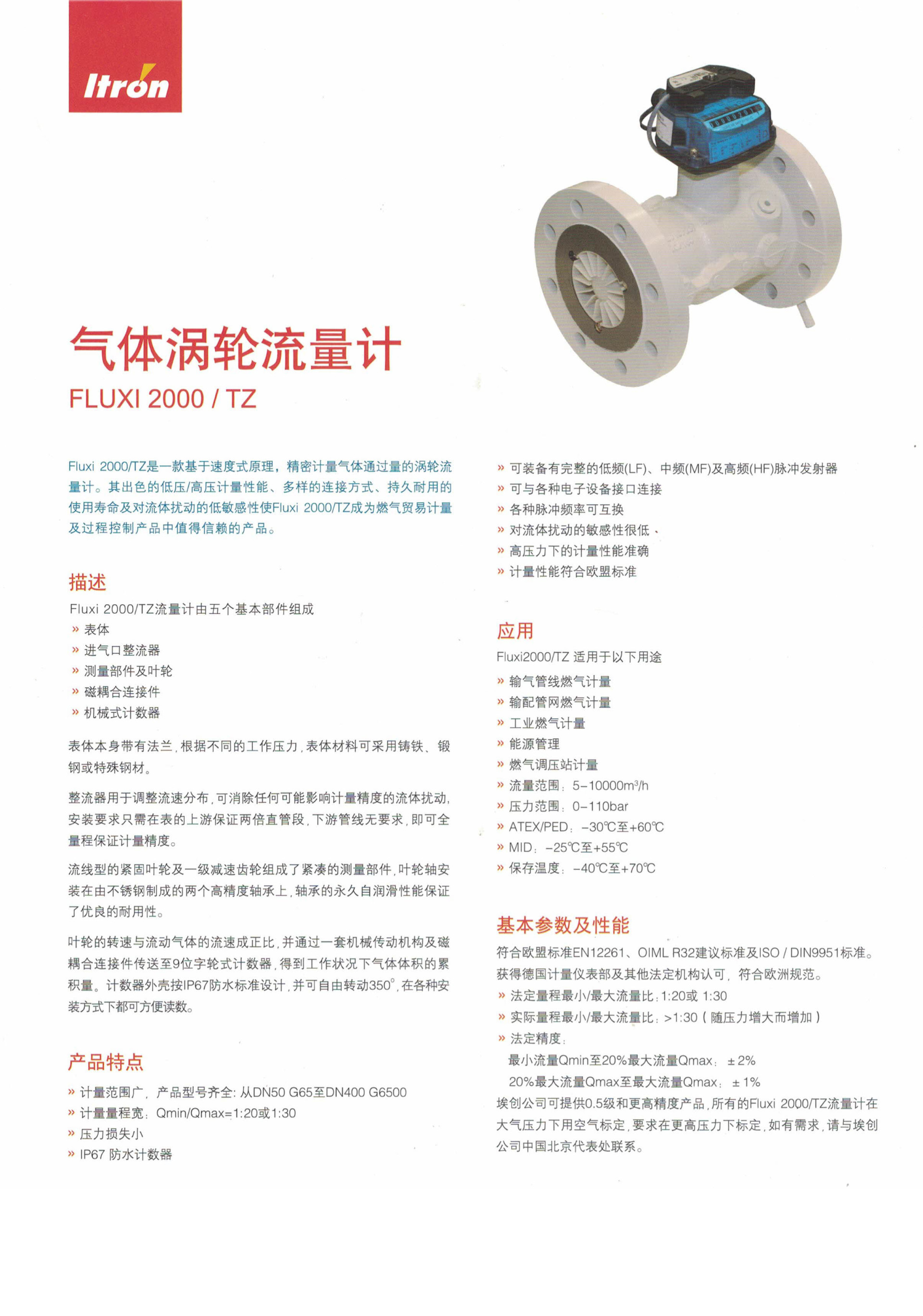
The turbine flow meter is a new type of intelligent instrument that integrates a turbine flow sensor and a display accumulator, developed using ultra-low power single-chip microcomputer technology. It has obvious advantages such as compact structure, intuitive and clear readings, high reliability, immunity to external power interference, lightning resistance, and low cost.
Turbine flow meters are widely used in the following measurement objects: petroleum, organic liquids, inorganic liquids, liquefied gas, natural gas, coal gas, and low-temperature fluids. In foreign countries, they are widely used for trade settlement in the transportation and collection stations of liquefied petroleum gas, refined oil, and light crude oil, as well as at the beginning and end of large crude oil transportation pipelines.
Although the excellent metering characteristics of turbine flow meters are favored by people, the impression is that they have moving parts and a short service life, which inevitably causes hesitation during selection. However, through unremitting efforts, the situation should have greatly improved.
Requirements for liquid viscosity in turbine flow meters:
Liquid turbine flow meters are viscosity-sensitive flow meters. When the viscosity of the liquid increases, the linear range of the instrument coefficient narrows, and the lower limit flow increases. When the viscosity reaches a certain value, there may even be a nonlinear region. The condition of spiral blades is much better than that of straight blades.
For liquids, sensors are usually calibrated with water. When the accuracy is at level 0.5, it can be used for liquids with a viscosity below 5×10⁻⁶ mm²/s without considering the effect of viscosity. When the fluid viscosity exceeds 5×10⁻⁶ mm²/s, liquids with comparable viscosity can be used for calibration without viscosity correction. In addition, some measures can be taken to compensate for the effects of viscosity, such as reducing the range of use, increasing the lower flow limit, or multiplying the instrument coefficient by the Reynolds number correction factor.
The effect of viscosity on the instrument coefficient is related to the structure type of the sensor and the size of the parameter caliber. There are several methods to express the influence of viscosity on the instrument coefficient: the relationship between the instrument coefficient and the Reynolds number, the relationship between the instrument coefficient and output frequency at several viscosities, and the relationship between the instrument coefficient and the ratio of output frequency to the motion annual value, etc.
Sweep Code Paying Attention to Xinhua Zhongrun
Company Phone:
Company Phone:
Room 647, Floor 6, Building 27, Taiwan Hubei Li, Tongzhou District, Beijing
Room 201, Building 7, Xinkai Square, Chuangye Headquarters Base, wuqing district, Tianjin
Copyright Xinhua Zhongrun (Beijing) Intelligent Technology Co., Ltd. Powered by:CEglobal SEO
Etron Turbine Flowmeter, ITRON Flowmeter, Roots Flowmeter, Gas Turbine Flowmeter, Etron Membrane Meter, Turbine Flowmeter, ITRON Electronic Corrector, Pressure Sensor Supplier, Pressure Sensor Sales Manufacturer