

BLOG
Contact Us
(Beijing):86 010-80519140
(Beijing):86 010-89511994
(Tianjin):86 022-22985589
Manager:86 18911772555
Li Chunxu:86 17622852508(WeChat with the same number)
sweep
Pay attention to Xinhua Zhongrun
ITRON Electronic Correction Instrument: Structural Characteristics of Roots Flow Meters
Release time:
2022-02-21 12:34
Source:
The manufacturer of ITRON electronic correction instruments believes that the Roots flowmeter is a new type of intelligent instrument that integrates the manufacturing technology of advanced domestic flowmeters. A major component of this new instrument can be said to be the core of the entire flowmeter, which is the Roots blower.
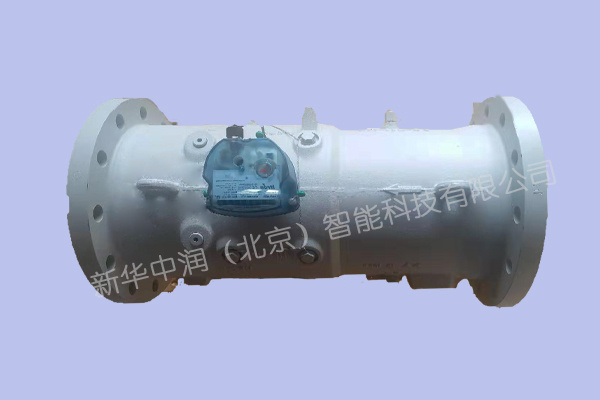
The manufacturer of ITRON electronic correction instruments believes that the Roots blower is a type of positive displacement blower. Two three-blade rotors rotate relative to each other in a sealed space formed by the housing and wall plates. Since each rotor uses an involute or external arc envelope for the rotor processing profile, the three blades of each rotor are identical, and the two rotors are also identical, greatly reducing the processing difficulty. CNC equipment is used for rotor processing to ensure that regardless of where the two rotors rotate, a certain small gap can be maintained as long as the distance between the centers of the two rotors remains unchanged, allowing gas leakage within permissible limits.
The manufacturer of ITRON electronic correction instruments believes that the Roots blower is a high-speed operating machine, so it generates vibrations, and the pulsation of the internal air also increases the vibration of the Roots blower, so it needs to be fixed to the ground during installation.
The manufacturer of ITRON electronic correction instruments believes that depending on the different types of blowers and their sizes, a square pit of 150*150mm and 300mm deep should be dug at the corresponding position on the ground, the anchor bolts should be buried, and then the blower should be connected with bolts and nuts. After filling the square pit with cement concrete and allowing the concrete to set, the nuts should be tightened to firmly connect the blower base with the concrete, which can reduce the vibration displacement during the operation of the Roots blower and improve the operational safety of the equipment.
The manufacturer of ITRON electronic correction instruments believes that the Roots flowmeter is a type of positive displacement gas flowmeter, characterized by high measurement accuracy, flexible installation, and space-saving. The Roots flowmeter mainly consists of a measuring chamber, conjugate rotors, and a counting device. A pair of conjugate rotors installed in the measuring chamber alternately bear the rotating torque under the pressure difference between the inlet and outlet of the circulating gas. Each rotation of the rotor outputs four times the effective volume of the measuring chamber. The number of rotor rotations is transmitted to the mechanical counter through a magnetic sealing coupling device and a reduction mechanism, thus displaying the accumulated volume of the output gas.
The manufacturer of ITRON electronic correction instruments believes that the factors affecting the measurement accuracy of the Roots flowmeter: It is not difficult to see from the principle of the Roots flowmeter that the key components affecting the measurement accuracy are the measuring chamber and the rotor, and the processing accuracy of these two components directly affects the measurement accuracy of the assembled flowmeter. Using traditional forming milling cutters to process rotors yields poor results. The symmetry of the processed rotor profile is poor, so the measurement accuracy has always remained at level 1.5, making it difficult to improve. Later, all were processed by machining centers, ensuring the symmetry of the rotor and measuring chamber. In addition, the dynamic balance of the rotor is also a key factor. After processing, each rotor will have some degree of imbalance, which generally mainly affects the initial flow of the flowmeter and then affects the measurement accuracy at low flow rates.
Sweep Code Paying Attention to Xinhua Zhongrun
Company Phone:
Company Phone:
Room 647, Floor 6, Building 27, Taiwan Hubei Li, Tongzhou District, Beijing
Room 201, Building 7, Xinkai Square, Chuangye Headquarters Base, wuqing district, Tianjin
Copyright Xinhua Zhongrun (Beijing) Intelligent Technology Co., Ltd. Powered by:CEglobal SEO
Etron Turbine Flowmeter, ITRON Flowmeter, Roots Flowmeter, Gas Turbine Flowmeter, Etron Membrane Meter, Turbine Flowmeter, ITRON Electronic Corrector, Pressure Sensor Supplier, Pressure Sensor Sales Manufacturer